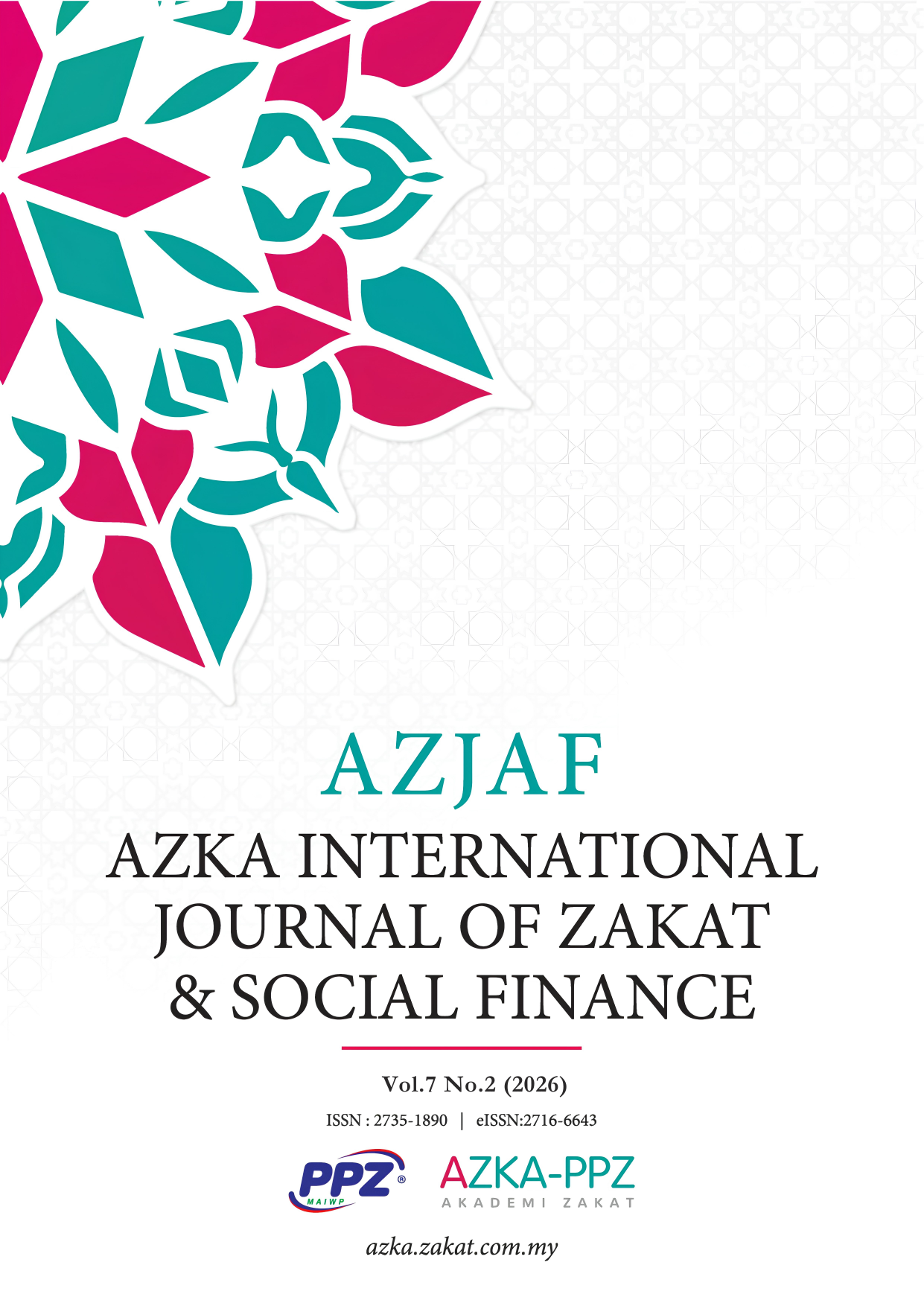
The Role of Zakat, Waqf, and Islamic Microfinance in Advancing Sustainable Development in Malaysia
DOI:
https://doi.org/10.51377/azjaf.vol7no2.256Keywords:
Islamic Social Finance, Zakat, Waqf, Islamic Microfinance, SDG, Sustainable Development GoalsAbstract
This study investigates the role of Islamic social finance (ISF) instruments, including zakat, waqf, and Islamic microfinance, in promoting sustainable development in Malaysia. The objective is to assess their roles in poverty reduction, financial inclusion, and micro-entrepreneur empowerment while aligning with national development goals and the Sustainable Development Goals (SDGs). The research relied on secondary data collected from government reports, academic literature, policy documents, and institutional case studies (i.e., Waqaf Tali Pancing). The findings indicate that Islamic social finance plays a crucial role in supporting socio-economic development. Zakat helps address basic needs and promotes financial inclusion. Waqf, particularly in the form of cash waqf, supports education, healthcare, and entrepreneurship. Islamic microfinance, notably through programs such as BangKIT, enhances income generation and business sustainability for underserved groups. These findings can guide Islamic financial institutions and NGOs in designing more effective and integrated ISF programs that are aligned with national and global development agendas. The study also proposes integrated strategies for enhancing ISF effectiveness aligned with national development priorities and SDGs.
Downloads
Downloads
Published
How to Cite
Issue
Section
License
Copyright (c) 2026 Nurul Suliyana Abu Zari, Norhidayah Abu Bakar

This work is licensed under a Creative Commons Attribution-NonCommercial-NoDerivatives 4.0 International License.